

My last post concluded my series on technical debt categories according to the paper Towards an Ontology of Terms on Technical Debt. The researchers did a great job of identifying the different categories of technical debt we can encounter, but I wanted to go into them a bit more.
The most important insight for me is that we can encounter technical debt in many places in the software development profession. This makes sense, as software development is so much more than writing code. Yet, too often do we still focus on only the code aspect of technical debt.
To a lesser degree there is also some attention for architecture debt, test debt and documentation debt, but I rarely hear developers (and even tech debt enthusiasts) talk about things like people or process debt.
There are many cases where an item of technical debt can be put in multiple categories. For example, tightly coupled modules could be categorized as both design and architecture debt. Other categories do rule each other out. In fact, the authors of the paper have created a table indicating which categories overlap and which don’t.
But what’s more important for practitioners (i.e. those “in the field”) is that we should be aware that technical debt occurs throughout our entire software development lifecycle:
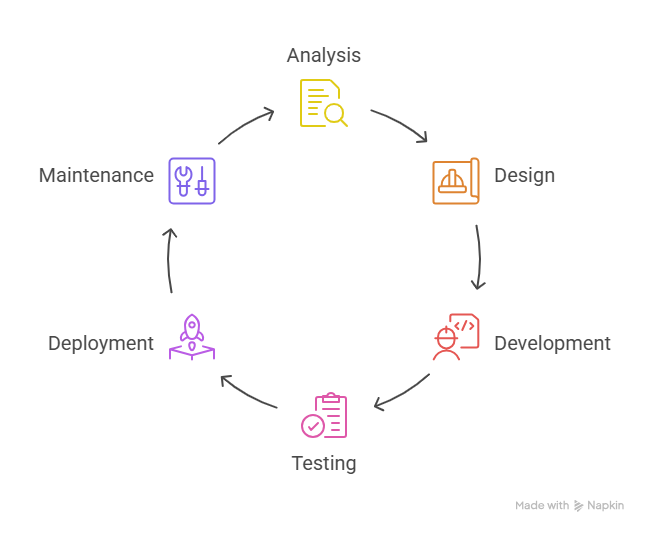
In each stage, we can choose to incur technical debt to go to the next stage faster. But each stage can also create technical debt without us knowing it. This debt can occur later and we’ll need to decide whether or not to pay back the debt.
Paying back requires time and effort, but waiting too long will only make the situation worse and any resolution later will require even more time and effort.